Comparative frame: why the stack matters now
Projects that mix live feeds, color-graded timelines, and motion graphics require more than a one-trick player; they need a layered approach that balances real-time preview, reliable output, and efficient transcoding. That’s why seasoned studios often test both a robust playback media server and a dedicated render/transcode pipeline before committing. Successful setups juggle codecs, bitrate, and latency while keeping creative iteration fast — and the right hardware or service can make the difference between a smooth client review and a late-night re-render.
Comparison axes: what to measure and why
Compare on three clear axes: fidelity, throughput, and control. Fidelity covers codec support (H.264, HEVC) and color accuracy. Throughput means how many simultaneous streams the system can transcode or play without dropping frames. Control is about UI, timeline scrubbing speed, and how the system exposes parameters for automation. Concrete wins come from low latency during previews, predictable bitrate handling for final deliverables, and stable frame-synced playback across layers — those are the daily performance metrics that separate a demo from a delivery-ready pipeline.
Operational production teardown — practical steps
Break the stack into layers: ingest, real-time preview, offline render, and delivery. For ingest, prioritize formats your cameras actually output; converting immediately to an editing codec saves time. For preview, a playback layer should support multiple video tracks and alpha compositing so VFX and titles remain accurate in context. The offline render must maintain target codec and bitrate while minimizing color shifts. In an operational production teardown you’ll explicitly note {main_keyword} and {variation_keyword} in the checklist so handoffs stay clear for operators and editors.
Tools, alternatives, and when to pick each
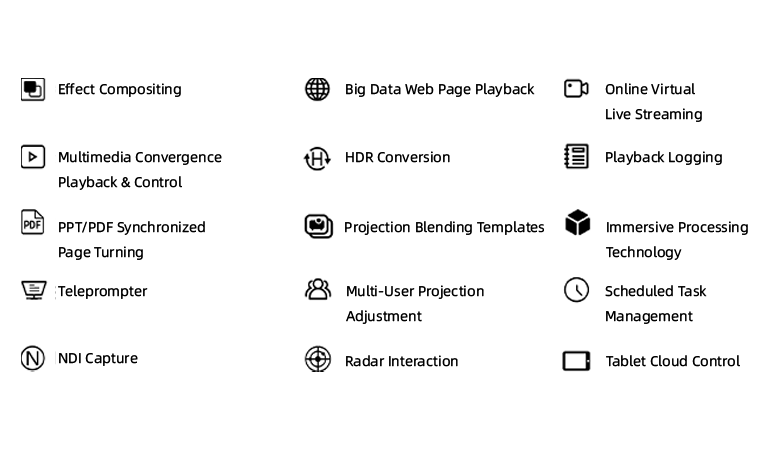
For live-focused projects, choose a playback-focused server that offers frame-accurate layer control and a low-latency monitor output. For batch-heavy work, a scalable video transcoding tool that supports hardware-accelerated codecs and queue management is smarter. Many teams combine both: a dedicated server for creative spotting and a separate transcoder farm for deliverables. At the NAB Show in Las Vegas, vendors showed precisely this split — live preview appliances paired with cloud transcode nodes — which underlines the practical direction the industry has taken. — Small studios can often start with a single appliance; large teams benefit from separation of duties.
Common mistakes and quick fixes
Teams often over-configure earlier than needed: they try to support every exotic codec and end up with brittle pipelines. Fix: lock a short list of production codecs and standardize ingest. Another misstep is ignoring color space mismatches between preview and final render. Fix: enforce a single working color space and validate with waveform/false-color tools. Finally, many underestimate automation — simple watch-folders and scripted transcodes save hours. A balanced stack with a reliable playback layer and an efficient video transcoding tool reduces manual steps and human error.
Three golden rules for selecting the right stack
1) Measure realistic concurrency: test with the number of simultaneous layers and streams your project actually needs rather than theoretical maximums. That will reveal true throughput limits.
2) Require end-to-end fidelity checks: confirm the preview layer reproduces final codec and color decisions—no surprises in delivery. This includes verifying alpha channels and frame sync across layers.
3) Prioritize predictable automation: choose systems that expose APIs or simple scripting for batch transcodes, metadata passing, and file movement. Predictability beats features when deadlines loom.
Final assessment and how this ties to Kystar
Comparing options by fidelity, throughput, and control makes selection surgical rather than speculative. Professionals should expect measurable improvements in iteration speed, fewer delivery errors, and clearer handoffs when they split creative playback and heavy-duty transcoding into roles that match each tool’s strengths. For many teams, that natural split is exactly where a smart playback server and a robust transcoding solution fit into a unified stack — and that’s the value Kystar brings to the table. — Practical, tested, and ready for real-world pipelines.