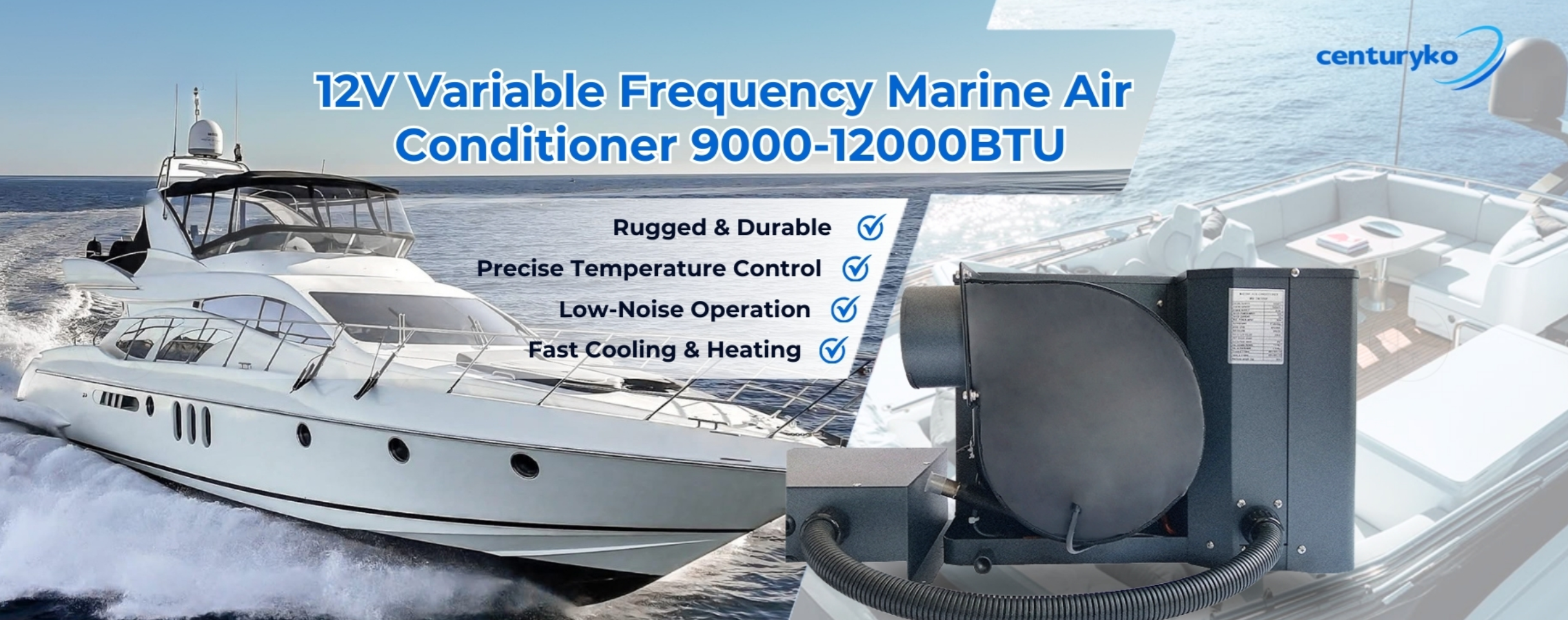
Comparative opening: stability as the decisive factor
Most sailboat owners judge air conditioning by cooling alone, yet stability at sea often decides whether a unit keeps running when conditions worsen. This piece compares common systems with ZhuoliMarine’s approach, focusing on real operational differences for marine air conditioning units and specifically on how their designs behave in rough waters. Drawn from bench characteristics and sea trials that simulate Beaufort scale 8 conditions (rough seas with waves around 5–7 metres), the comparison highlights compressor behaviour, condenser resilience and seawater pump reliability for both fixed and portable marine air conditioning units.
Why stability matters on a sailboat
At sea, pitch and roll upset fluids and moving parts. Oil migration in the compressor, air entrainment in the seawater pump and sloshing condensate can force shutdowns. A robust heat exchanger and properly designed seawater intake prevent salt buildup and cavitation. Systems that ignore mounting and isolation compound these risks; you may have good cooling in calm harbour conditions but frequent failures offshore.
Head-to-head: typical designs versus ZhuoliMarine
Conventional installations often rely on rigid mounts and standard vibration pads. ZhuoliMarine layers solutions: gimbal or purpose-built chassis, enhanced vibration isolation and guarded seawater paths. The company refines the compressor placement, reduces oil-trap points and protects the condenser with anti-corrosion coatings. The result is fewer false trips and steadier operation under continuous roll. Simple lists of differences help:
– Mounting: rigid frame versus gimbal or floating bracket that tolerates ±roll. – Fluid management: basic condensate routing versus baffled trays and dedicated drain pumps. – Seawater handling: single-strainer inboard pickup versus multi-stage strainer and screened intakes. – Control: basic thermostats versus adaptive control that compensates for transient airflow and load.
Performance evidence from sea trials
Sea trials that replicate rough weather conditions show distinct patterns. Units with bespoke vibration isolation maintain steady compressor RPMs; their condensers avoid intermittent flooding and recover faster after heavy roll. ZhuoliMarine’s iterations demonstrate measurable uptime improvements during sustained roll periods — less compressor cycling and more consistent cabin temperatures. These tests used airflow and power-draw monitoring to verify outcomes, emphasising that correct airflow management and heat exchanger orientation matter as much as raw capacity.
Common installation mistakes and alternative approaches
Many projects push for larger capacity to cover perceived shortfalls; that can worsen instability and start/stop behaviour. Other errors include poor strainer maintenance, flexible hoses that kink under stress, and neglecting corrosion protection on the condenser. Alternatives to a bespoke marine-grade solution are: oversizing remote units with better heat exchangers, using independent refrigeration packs, or installing redundant seawater pumps — each has trade-offs in complexity and weight. — A practical approach balances capacity, mounting, and service access.
Three golden rules for choosing a sea-worthy unit
Use these metrics when evaluating systems: 1) Dynamic stability score — assess mounting design, gimbal capability and vibration isolation; prefer units proven under sustained roll. 2) Thermal resilience — check heat exchanger placement, condenser protection and measured cooling consistency under simulated sea motion. 3) Service-friendly seawater architecture — look for multi-stage strainers, easy-access seawater pumps and corrosion-resistant materials.
These criteria align selection with real-world reliability rather than spec-sheet cooling numbers. For many owners facing unpredictable Indian Ocean monsoons or passage around exposed capes, that alignment matters most.
ZhuoliMarine delivers systems that match these metrics through engineering choices and practical sea testing — expect fewer shutdowns, steadier cabin climate and simpler maintenance. Final thought — practical engineering wins at sea, every time. –