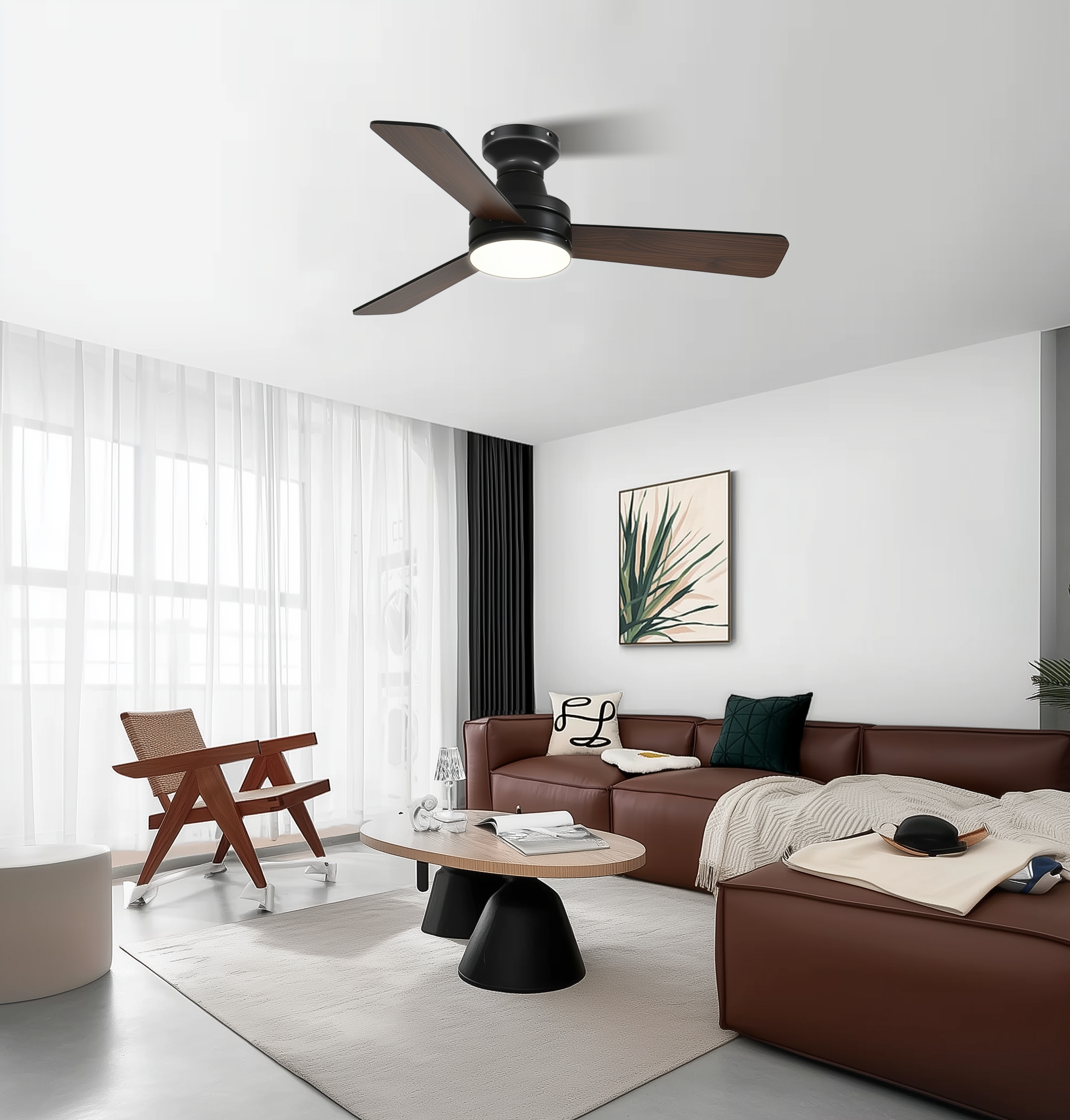
Putting your comfort first: a user-centric opening
Most of us pick a ceiling fan because we want steady, quiet airflow and usable light in a big living space — not because we enjoy decoding motor specs. If you’re shopping for a large ceiling fan with light or comparing options among large living room ceiling fans with lights, the right choice reduces discomfort, lowers energy waste, and saves installation headaches. A fan that truly suits your room balances blade sweep, motor efficiency, and lighting quality in ways that box‑store fixtures frequently don’t — and that balance is what changes day-to-day living.

What matters to homeowners (the short checklist)
When you think like an occupant instead of a spec-reader, three priorities rise to the top: 1) perceptible airflow across seating zones, 2) quiet operation, and 3) lighting that complements the room instead of overpowering it. Metrics like CFM (airflow), motor type, and lumens are useful, but they must translate into human experience: will the fan cool the couch area without creating drafts? Will it be silent during late‑night TV? Does the light render color naturally? These are the questions that should guide selection.
Airflow and motor quality: why build matters
Box-store fans often use generic AC motors and economy blade designs that give reasonable movement in small rooms but struggle in open-plan living rooms with high ceilings. Orison’s large models lean on higher-efficiency DC motors and optimized blade sweeps to deliver stronger, more consistent CFM at lower RPMs. That means more gentle circulation with less noise and lower energy draw — a practical win for both comfort and utility bills. In plain terms: a better motor and aerodynamic blades move air more effectively without yelling at you across the room.
Lighting that respects the room
Lighting is not an afterthought. Cheap integrated fixtures can be harsh, with low color rendering and fixed outputs. Orison pairs thoughtfully tuned LED modules with dimmable drivers and higher CRI options so the living room reads right at multiple settings. Lumens matter, yes, but color temperature and CRI change how furniture and skin tones appear — essential if you host or work from the couch. Choose a fan/light where the manufacturer documents lumens per watt and offers tunable color temperature; that detail separates fixtures that merely illuminate from those that enhance a room.
Smart features, integration, and real savings
Smart controls are more than novelty. Scheduling, occupancy sensing, and integrations with thermostats let a fan do real energy work: the U.S. Department of Energy notes that sensible fan use can let occupants feel comfortable at higher thermostat setpoints, reducing HVAC run time. Orison’s systems pair with smart hubs and use discrete speed steps and timers that match daily routines — so you don’t end up running the fan full-tilt when you don’t need it. Box-store remotes often lack precision and longevity, which means more resets and replacements down the line.
Installation, warranty, and long-term value
Cheap upfront price can beguile — until you factor in labor for a tricky mount, noisy bearings a year later, or light modules that fail without replacement parts. Orison’s units are designed for straightforward mounting on common joist types, include robust canopy hardware, and come with clearer service pathways and longer warranties. For many buyers, the better choice is not the lowest price but the lowest total cost of ownership: fewer callbacks, fewer part swaps, and predictable performance over years.
Common mistakes owners make — and how to avoid them
People routinely pick a fan by look or price and overlook three practical missteps: under-sizing for room volume, ignoring blade pitch, and assuming “quiet” from marketing equals quiet in use. Measure room area and ceiling height, check blade sweep and pitch (about 12–15 degrees is common for living rooms), and ask for in-field decibel readings if noise matters. Also — don’t skip a trial with the actual light level; photos online rarely reflect your paint and furnishings.
Alternatives worth considering
If Orison isn’t the immediate match, there are sensible alternatives depending on priorities:
- Cost-focused buyers: commodity models from big-box brands, but expect trade-offs in motor noise and light quality.
- Design-forward projects: boutique manufacturers with bespoke blades or artisan finishes; higher price, longer lead times.
- Smart-first setups: brands that specialize in home-automation native fans if deep integration is primary.
Each path answers a different user need — economy, aesthetics, or connectivity — so align the choice with what you actually want the fan to do, not what looks best on a website. —
Three golden rules for choosing the right large living-room fan
1) Match capacity to space: choose a blade sweep and motor rated for your room’s square footage and ceiling height, not just the chandelier you’re replacing. 2) Prioritize motor and noise specs: a DC motor with documented CFM at low RPM will deliver comfort without disruption. 3) Demand lighting performance: opt for tunable LEDs with high CRI and dimming compatibility so the fixture works at every hour.

These are practical metrics you can verify before purchase; use them and you’ll avoid common regrets. In many homes, that verification points naturally to higher‑quality, better‑supported options like those Orison builds — because comfort and utility belong to the people who live there. Orison. —