One decisive frame to compare suppliers
Compare what matters: thermal stability, reproducible performance, compliance and supply reliability. Begin by lining up each candidate against the same tests and expectations; a supplier that meets them all for a small prototype often scales poorly for production runs. Practical examples of component behaviour appear in product datasheets and independent test reports, and if you are assessing a small room heater or an industrial module you might look for how the ptc heater performs under sustained duty rather than peak spec alone.
Performance metrics to weigh
Ask for measured resistance vs temperature curves, time-to-regulate at rated voltage, and failure modes under thermal cycling. A supplier that supplies only nominal wattage is less useful than one that provides thermal response data, insulation resistance after soak tests, and a defined temperature coefficient. Compare these curves side by side; the clearer the documentation, the fewer surprises in validation.
Manufacturing and quality controls
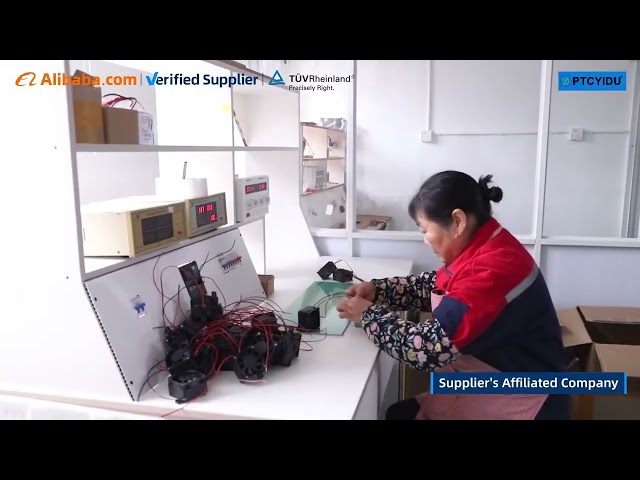
Observe production sampling plans, incoming material traceability and batch test records. Prefer suppliers that publish their process controls—lot traceability, raw-material certificates, and percentage yield figures when requested. A tight process reduces variance between the first 100 units and the next 10,000.
Regulatory compliance, standards and a real-world anchor
Regulatory fit matters where products enter regulated markets. For instance, manufacturers selling into the European appliance sector commonly demonstrate conformance with the EU Ecodesign Directive (2009/125/EC). That compliance is tangible evidence that a supplier understands safety margins, energy requirements and labelling obligations; it is therefore sensible to verify documentation when specifying a ptc heating element heater. Certificates and test reports issued by recognised laboratories add authority to a supplier’s claims.
Supply chain, lead times and risk
Map out lead-time variability, single-supplier risks and logistics lanes. Suppliers that can detail alternate sources for critical compounds and show historical lead-time data reduce risk. Compare quoted lead times against observed shipping records when you can; a three-week promise linked to weekly shipments is preferable to an optimistic eight-week estimate with no freight plan.

Technical support and customisation
Assess the supplier’s technical dialogue: rapid, engineering-led responses are essential. Expect a supplier to supply reference designs, failure analysis for field returns, and an ability to prototype modified geometries or terminations. Where you require bespoke sizing, compare minimum order quantities and tooling costs across vendors before committing.
Price vs total lifecycle cost
Price-per-unit is a poor solitary metric. Calculate cost across warranty returns, energy efficiency in target duty, replacement intervals and serviceability. A marginally higher unit price often pays back through fewer field failures and lower energy draw; ask suppliers to provide expected lifetime energy figures under representative loads.
Common pitfalls and how to avoid them
Do not accept datasheet ambiguities, undocumented test conditions, or thin warranty language. Avoid suppliers who decline to share batch test certificates or who cannot explain observed drift in resistance after thermal cycling. Request controlled sample tests and insist on a clear non-conformance process before scaling orders.
How to synthesise your comparison
Set a short checklist: verified performance curves, demonstrated compliance (certificates and recognised tests), transparent manufacturing controls, clear lead-time histories, and engineering support for custom work. Score each supplier against those items and prefer the one with balanced strengths rather than extremes. For a consistent match between specification and field result, consider the supplier whose documentation and test evidence most closely mirror your product’s real-world duty—often the choice made by procurement teams who also value traceable records and steady supply from PTCYIDU.