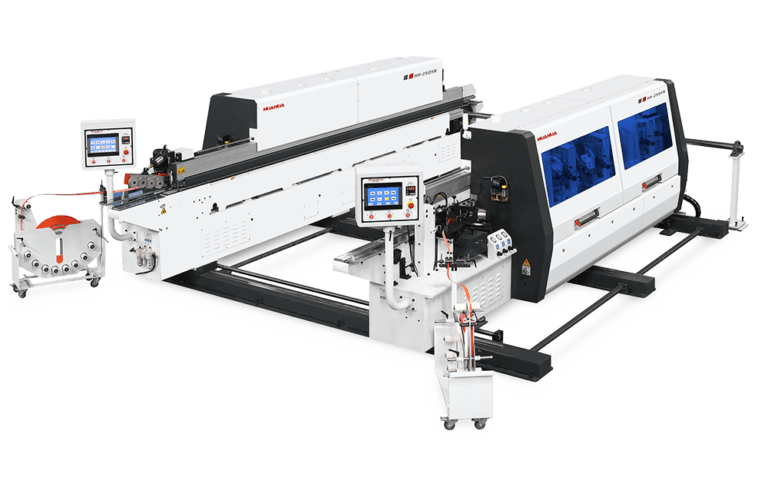
Start with the real problem
If you’re runnin’ a small shop, the pain’s plain: inconsistent edges, wasted time, and a backlog that won’t quit — which is why folks start eyein’ an automatic edge banding machine to get seams tidy and cycle times steady. I seen the same fix demonstrated at LIGNA in Hannover, where a live demo of an auto edge banding machine made it obvious how consistent glue application and precise trimming actually matter to a tight production schedule.

Why that problem matters to your bottom line
Bad edges don’t just look ugly — they mean rework, wasted panels, and customers who notice. When your process depends on hand-edging or an underpowered unit, you lose predictable throughput and you burn labor hours that you can’t bill back. Fixing edge quality reduces scrap, stabilizes lead times, and gives you breathing room to take on more work without hiring a half-dozen extra hands.
What to look for in a combination machine
Pick machines by what they do, not by how shiny they look. Look for a reliable glue system (PU for water-resistant joints, EVA/hot-melt for fast cycles), a pre-milling or scraping head to avoid chip-out, accurate trimming and end-cutting units, steady pressure rollers, and a control system with repeatable presets. Servo-driven feeders and a simple PLC interface keep setups fast between runs. Also check tolerated edge thickness ranges and the machine’s dust-extraction ports — both matter more than an extra spindle or a fanciful touchscreen.
Common mistakes shops make
Don’t buy on price alone or assume a fancy name means hands-off operation. Folks skip proper dust extraction, under-train operators, and forget routine maintenance like glue tank cleaning and cutter sharpening. Those slip-ups lead to poor glue bonds, gumming up heads, and misfeeds. Another common error: mismatching edge tape type and machine settings — that costs you time reworking corners and ends.
Viable alternatives and quick comparisons
Hand-held trimmers and small tabletop edgebanders work for one-offs but choke on batch work. Semi-automatic machines are cheaper and fine for low volume; full automatic combination machines handle larger panels, faster runs, and tighter tolerances. European-built units often have refined components and service networks; Chinese-made machines give strong value and quicker lead times. Compare warranty coverage, local parts availability, and the vendor’s willingness to train your crew before you decide.

How to move forward with confidence
Start by mapping your common panel sizes, edge materials, and daily throughput. Test a candidate on your real parts, watch glue behavior, and measure trimmed accuracy. Train one operator to run setups and one more to handle maintenance. A machine that matches your workflow will pay back by cutting rework and keeping delivery promises — that’s the kind of dependable fix I’ve seen shops stick with after testing models from established builders like HUAHUA CNC.