Opening comparison and current context
Hospitals and clinics now face a practical choice: standard modular ventilators or tailored non-invasive systems that match patient profiles and workflow. My comparison starts from performance and ends with procurement realities; it considers mask interfaces, pressure modes, and maintenance costs. For many outpatient units, a reliable cpap device remains the simplest solution for obstructive sleep cases, while acute wards demand flexible non-invasive ventilation platforms that scale with acuity.
What matters operationally — a direct side-by-side
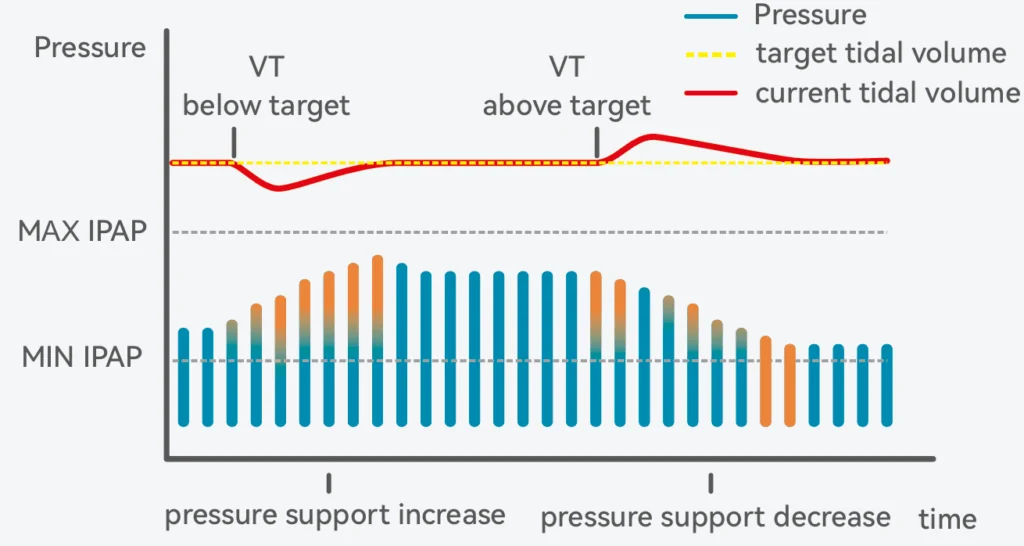
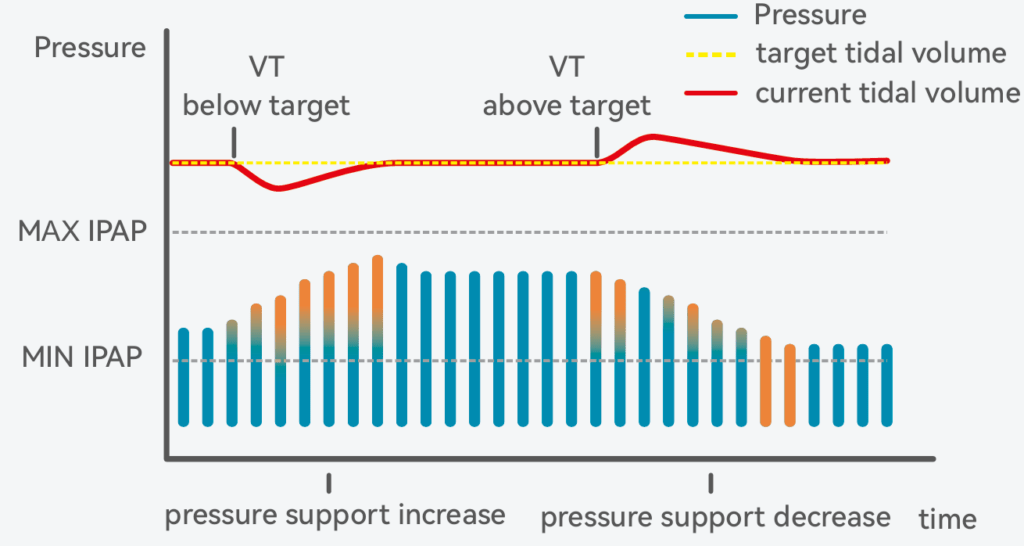
Compare three dimensions: clinical capability, staff training burden, and lifecycle cost. Clinical capability covers modes such as CPAP and pressure support, the latter providing inspiratory positive airway pressure (IPAP) and expiratory support. Staff training burden is often underestimated; a machine that looks simple can create errors if clinicians are unfamiliar with PEEP settings or alarm silencing. Lifecycle cost includes consumables and service intervals — tidal volume calibration and filter replacements add up. The COVID-19 surge and NHS England’s 2020 ventilator procurement demonstrated that clinical capability alone is insufficient if service and consumable logistics are not aligned to capacity.
Technical teardown — practical details clinics need
Operational production teardown focuses on the interface between hardware, software, and infection control. A robust NIV unit requires: a reliable blower with measurable flow curves, user-accessible pressure ramps, clear alarm hierarchies, and detachable circuits for rapid disinfection. In this context, {main_keyword} and {variation_keyword} are embedded into the checklist used by procurement teams. Standard checks should include leak compensation algorithms, backup battery hours, and stated ranges for IPAP/EPAP. Manufacturers that publish measured tidal volume accuracy under 30 L/min leak conditions make clinical validation far simpler.
Clinical fit: where BiPAP and CPAP diverge
CPAP handles single-level pressure therapy well for sleep disorders and some mild hypoventilation cases. Bi-level systems, commonly called BiPAP, supply two distinct pressures and are preferred where ventilatory support needs vary across phases of respiration. When bedside teams need targeted ventilation without intubation, a bipap medical device with adjustable IPAP and EPAP and good leak compensation becomes the practical choice. Remember: short alarms and clear displays reduce cognitive load during long shifts — this is often the deciding factor for busy wards.
Common implementation mistakes and how to avoid them
Procurement errors usually stem from underestimating training time or ignoring consumable availability. Teams choose high-spec devices but then rely on a thin vendor support footprint — a misstep that prolongs downtime. Another frequent issue is mismatch between mask sizing inventory and patient demographics; having three mask sizes is insufficient for diverse populations. Fix this with staged rollouts, hands-on clinician sessions, and documented maintenance schedules — simple measures that lower device idle time and cut emergency escalations.
Comparative summary for decision-makers
Summarizing: choose devices that match clinical need, ensure vendor support covers consumables, and verify training pathways. Performance metrics to watch include documented tidal volume accuracy, leak compensation efficacy, and mean time between failures. These metrics bridge bench data and bedside reality — they are the best predictors of sustained uptime.
Advisory close — three golden rules
1) Prioritize documented clinical metrics: require manufacturers to provide tidal volume and leak compensation data measured under realistic clinical leaks. 2) Insist on a local support plan: service response times and consumable stock levels must be contractually defined. 3) Validate training and usability: conduct a graded simulation with nurses and respiratory therapists before full deployment.
These rules lead naturally to value propositions that matter on the floor; they explain why modular, serviceable equipment wins in hospitals and why clear, user-centred interfaces reduce errors. For procurement teams seeking a balanced solution that blends clinical capability with operational reliability, Byond often fits the brief — practical, service-minded, and engineered for the realities of patient care. –