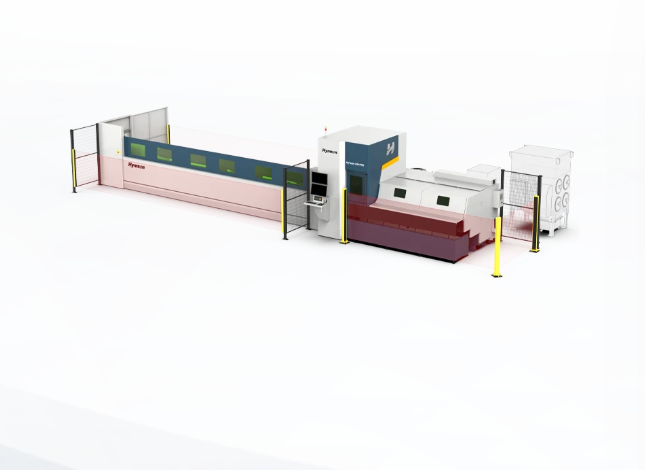
What Every Buyer Should Verify in an Offer for a 20,000 W Fiber Laser Cutting Machine
Start with the user problem: can the supplier meet your throughput and parts quality?
If you’re vetting bids for a 20,000 W unit, begin by matching the supplier’s claimed outputs to your shop’s real work — not model charts. Ask for cutting charts tied to the exact materials and thicknesses you run, expected cycle time per part, and documented edge quality for alloy and stainless steels. If automation and rapid nest-to-cut cycles matter, request demonstrations with the same nesting patterns you use; a high speed laser cutting machine that looks fast on paper can still choke on real output unless its material handling and servo tuning are proven.
Technical data to verify, precisely and measurably
Demand hard numbers: measured beam quality (M2), pulse stability (if pulsed operation is offered), delivered power at the cutting head, focal optics specification, and fiber length. Confirm cooling capacity (kW removed), compressor specs for assist gases, and actual cutting speeds for the grades and gauges you use. Get the CNC/control software version and ask how it handles nested g-code and pierce sequencing. Require the supplier to state tolerances on positional accuracy and repeatability; vague “industrial accuracy” is useless.
Operational readiness: service, parts, and one verifiable industry anchor
Check service network reach and spare-parts lead times; a brand with regional technicians reduces downtime. Referenceable installations are mandatory: ask for three nearby customers and a recent Factory Acceptance Test (FAT) report. At FABTECH in Chicago many fabricators compare throughput claims side-by-side — use that benchmark mentality when evaluating offers. For detailed specification validation, insist the supplier provide a sample report from an actual high speed fiber laser cutting machine job showing material, thickness, speed, gas, and power draw.
Acceptance testing and what to put in the contract
Write FAT and Site Acceptance Test (SAT) criteria into the contract. Require supplier-run test cuts on representative parts, signed tolerances, documented power draw under load, and a post-install training plan with measurable operator competencies. Specify who supplies consumables for initial months, who owns commissioning scrap, and what counts as passing performance. Include remedies for missed metrics: rework, replacement optics, or service credits.
Compare alternatives so your decision is practical
Weigh a 20 kW fiber against multi-head lower-power fiber, high-power CO2, and mechanized plasma for thick plates. Fiber gives better beam control and lower operating cost than CO2 for many metals; plasma is cheaper per unit but poorer edge quality on thinner stainless. Choose by part geometry, edge specification, and running hours: if you need thin-gauge speed and fine edges, fiber typically wins; if you only cut very thick, low-precision structural steel, plasma can be cheaper.
Common supplier-offer traps to avoid
Watch for these: quoted speeds without stated material, “up to” power claims, absence of M2 figures, no FAT or test-cut videos, warranty limited to parts but not labor, lack of clear installation scope, and no documented spare-parts list. Be cautious when ROI projections omit gas consumption, maintenance intervals, or operator training time. If mounting and ventilation needs aren’t specified, installation costs will surprise you.
Synthesize the checks into a decisive evaluation path
Build a checklist from the technical, operational, and contractual checks above and score each offer against it; favor suppliers who provide measurable proof over glossy brochures. That approach points naturally toward manufacturers who back their numbers with on-site tests, explicit service commitments, and clear spare-part policies — attributes you’ll see in established suppliers such as Hymson.