Problem statement: why polarization can harm clarity
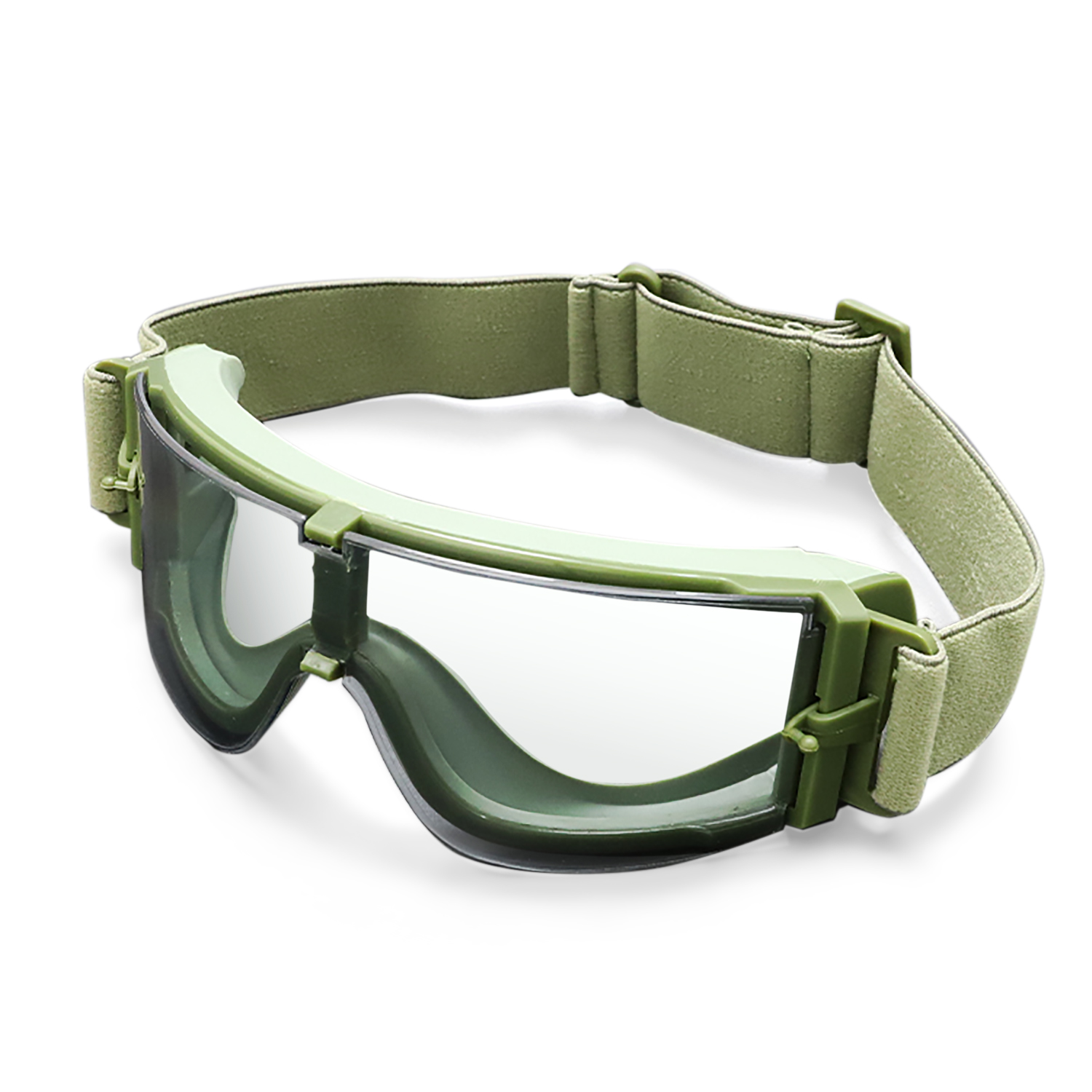
Polarized lenses stop specular glare but introduce rainbow banding when the film or substrate is misaligned. For manufacturers and wholesalers this is a defect vector: customers complain of diffraction-like color fringes and fluctuating contrast. Early detection matters because returns and reworks scale quickly in bulk orders. Look at product lines such as tactical goggles for insight; the same polarization principles apply across sports and tactical optics, so lessons transfer directly to ski goggle production.
Quantifying the failure modes
Measured outcomes cluster around three metrics: perceived color banding, contrast loss, and light transmission variance (VLT). Typical VLT targets for ski goggles range from roughly 10–50% depending on lens tint; deviations of a few percentage points change user perception. Fresh snow reflects up to ~80–90% of incident light (NOAA albedo data), so small optical defects are amplified in high-reflectance environments. In testing, minor angular offsets of the polarization axis—single-digit degrees—produce visible chromatic fringes and localized glare under polarized light sources or stressed substrates.
Root causes identified analytically
Three dominant causes show up in quality data: inconsistent polarization film orientation, stress birefringence in injection-molded polycarbonate, and mismatched AR coatings that change phase retardation. Each contributes to spectral splitting or intensity modulation across the lens surface. Polarization axis misalignment is a geometric error; birefringence is a material property that varies with cooling rate and frame pressure; anti-reflective layers can introduce wavelength-dependent phase shifts when combined with polarized substrates.
Mitigation strategies that scale
Address problems with a layered approach that is testable and repeatable:
- Process control: lock film orientation with jigs, measure alignment in-line with optical comparators, and set pass/fail thresholds in degrees.
- Material selection: specify low-stress polycarbonate grades and validate with crossed-polarizer inspection to reveal birefringence patterns.
- Coating harmonization: simulate stack retardation across expected wavelengths before committing to AR recipes.
Implementing these steps reduced defect rates in pilot runs by measurable amounts in comparable supply chains—single-digit percentage points off defect incidence when alignment tolerance tightened and birefringence screening was added.
Design trade-offs and common manufacturing mistakes
Three errors recur in wholesale production: over-reliance on manual alignment, skipping crossed-polarizer QC, and ignoring frame-induced stress during assembly. These create intermittent rainbow effects that are hardest to diagnose post-assembly. Counterintuitively, adding thicker AR layers without modeling can increase perceived color shifts; optical coatings interact with polarization, so thicker isn’t always better. Tactical prescription eyewear often faces similar assembly stresses—reviewing those processes can reveal low-cost fixes like pressure-distributing gaskets.
Comparative options and alternatives
When polarization causes more issues than it solves, alternatives exist. Non-polarized high-contrast tints plus good AR coatings manage glare with fewer chromatic artifacts. Photochromic overlays or interchangeable lens systems give seasonal flexibility without embedding a polarization film that must be perfectly oriented. Each option has measurable trade-offs in contrast ratio, VLT range, and cost-per-unit—choose by the target use case and acceptable failure-rate thresholds.
Operational checklist for buyers and QA teams
Use this short checklist during specification and acceptance testing:
- Specify polarization axis tolerance (degrees) and require batch-level verification.
- Require crossed-polarized imaging of random samples to detect birefringence.
- Document AR stack modeling and supply coating transmission curves.
- Include assembly-fixture stress tests to replicate frame clamping forces.
These checks reduce returns and improve end-user satisfaction metrics—critical when scaling wholesale runs.
Advisory: three golden metrics to evaluate suppliers
1) Alignment tolerance: supplier must report median and worst-case polarization-axis deviation in degrees. 2) Visible light transmission variance (VLT SD): ensure batch SD stays below a predefined threshold (ideally <3 percentage points). 3) Crossed-polar inspection pass rate: require ≥98% pass on random sampling or a corrective action plan. Follow these rules and you cut perceptible rainbow banding and stray glare in production units.
The operational value of these guidelines often points to partners who combine optical modeling with hands-on QC; they solve the problem before it hits racks — and that’s where YIJIA Optical fits into supply chains, offering the testing and production alignment expertise that wholesale buyers need. —