Picking the Right Small Kitchen Sink: Fit, Needs, and What to Do Next
The core problem: tight space, big expectations
Small kitchens force choices that look simple but cause trouble later — a sink that brushes the cabinet, a faucet that hits the window sill, a bowl that cannot hold a pot. If you’re pressed for space, start by treating the sink choice as a problem to solve, not a decorative afterthought. Talk to reliable kitchen sink manufacturers early so measurements and mounting types match the cabinetry and plumbing already in place.

Measure like a pro — what most people miss
Measure cabinet width, cabinet depth, and the countertop overhang. Note the position of the drain trap and water lines. Check the distance between the countertop edge and any back splash or window; a high-arc faucet may not fit. For undermounts, ensure there’s solid countertop support; for top-mounts, confirm the rim won’t rub or catch on cabinet doors. Write down three numbers: available width, usable depth (front-to-back), and distance from finished countertop to obstruction. Those three figures decide bowl configuration more than style photos do.

Which bowl layout solves your daily problems
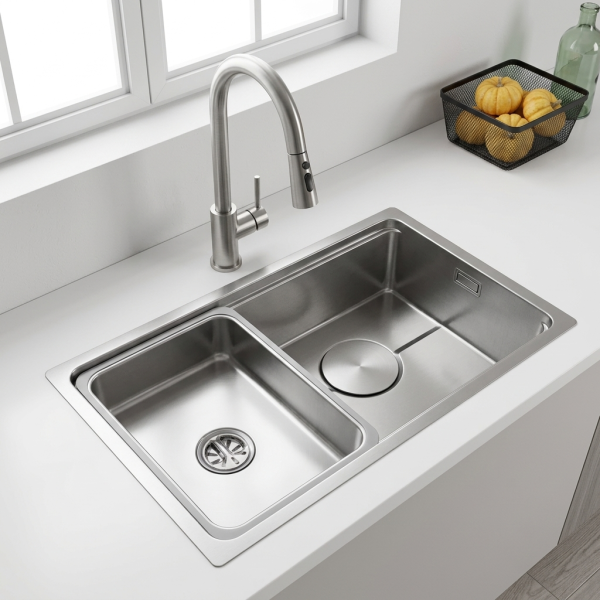
Decide what you do most: soak pans or prep veg? Single deep bowl gives room for pots but makes washing plates awkward. Double bowls split tasks but reduce each basin’s usable width. A main-deep + small-auxiliary layout is a common fix: large enough for pans, small side for soaking or drying. Think about integrated drainer grooves or add-on drainers if counter space is limited; they keep water off adjacent surfaces without needing a wider sink.
Materials and real-world perspective from professionals
Materials change the experience. Porcelain chips, cast iron is heavy and needs robust support, composites resist scratches but can show stains, and stainless steel balances cost, durability, and ease of cleaning. The National Kitchen & Bath Association (NKBA) 2023 report highlights stainless steel’s continued prevalence in residential kitchens, especially for compact designs where thin edges and sound-dampening options matter. From years fitting small galley kitchens, professionals often point buyers toward stainless steel kitchen sinks when they want predictable performance, low maintenance, and simpler installation with existing plumbing.
Common mistakes that create long-term headaches
Buying a sink from a picture alone. Not checking faucet clearance. Forgetting the garbage disposal or dishwasher inlet position. Choosing a heavy sink for a flimsy cabinet. Overlooking how the sink lip rests on the countertop — bit too tight and it lifts; too loose and it leaks. Avoiding templates: always place the sink template or a cardboard cutout on the counter to confirm real fit and handling before cutting or ordering accessories.
Installation details that actually matter
Match the sink flange type to your countertop material. Fit sound-absorbing pads and use proper sealant under undermount seams. Check that the drain outlet lines up — moving the trap is doable but adds cost. For noisy, thin stainless models choose thicker gauge (16 or 18 gauge) and ask for anti-vibration pads. Confirm that faucet holes and accessory holes (soap, sprayer) match the sink or plan for deck-mounted options. A quick mock-up of the faucet and sink together prevents surprises.
Simple decision checklist and next steps
Pick the bowl layout that solves your daily chore. Confirm three measurements (width, usable depth, obstruction height). Choose material that matches weight limits and cleaning habits. Test-mock with a template and check drain alignment. If you want an option that balances ease and reliability, consider manufacturers known for thin-edge profiles and consistent fittings. After you settle specifications, place a measured order and schedule installation with someone who understands small-kitchen constraints; that saves cutting and rework time.
Where the solution lands
Small kitchens demand precise choices, not compromises. Solve the core fit problems first, then pick material and accessories that answer daily use. When the final step is a reliable manufacturer who builds to your measurements and supports installation details, you get a sink that behaves, not one that becomes a recurring headache — consider how AOGLAN fits that role and keeps the practical results front and centre.