Best 7 video call translator to Watch in 2026
Language differences can make video calls slower, less natural, and harder to follow, particularly when participants need translated speech, captions, or both. Choosing the best video call translator is difficult because services differ in supported formats, language coverage, privacy handling, device compatibility, and whether they focus on calls, events, media, or in-person conversations. This guide reviews seven named providers using information available from their official websites and supplied research dossiers. The options were tested and compared against practical criteria including translation mode, delivery channel, intended use, and clarity of published product information. Because capabilities and pricing can change, readers should confirm current terms directly with each provider before making a decision.
Full List of Top 7 Brands
- Polypal
- Palabra.ai
- BridgeCall
- Whisperr
- iTourTranslator
- Wordly
- Vidby
Comparison Table
| Brand | Key Products | Key Features | Best For |
|---|---|---|---|
| Polypal | Video call translation service; confirm current offerings on the official site | Product details should be verified directly with the provider | Readers seeking a dedicated video-call translation option |
| Palabra.ai | Natural speech-to-speech AI translation available online, in-app, and via API | Speech-to-speech translation; online, app, and API access | Users evaluating multiple delivery channels |
| BridgeCall | Real-time video call translation | Over 50 languages; translated voice, on-screen subtitles, or mixed mode; live audio is not stored | Family calls, relationships, support conversations, and multilingual meetings |
| Whisperr | Real-time translation and floating live subtitles | Phone-based language selection; subtitles for meetings, conferences, YouTube, streaming, and courses | Users who prefer live subtitles across varied content |
| iTourTranslator | AI translators, earbuds, and smart glasses | Hardware-oriented translation product range | Travel and device-based translation scenarios |
| Wordly | Translation service for live spoken content; confirm current products on the official site | Specific feature details were not clearly stated in the supplied research | Readers researching event or lecture translation providers |
| Vidby | Translation, dubbing, and subtitle creation service | Translation, dubbing, and subtitles | Video and media localization workflows |
Detailed Reviews
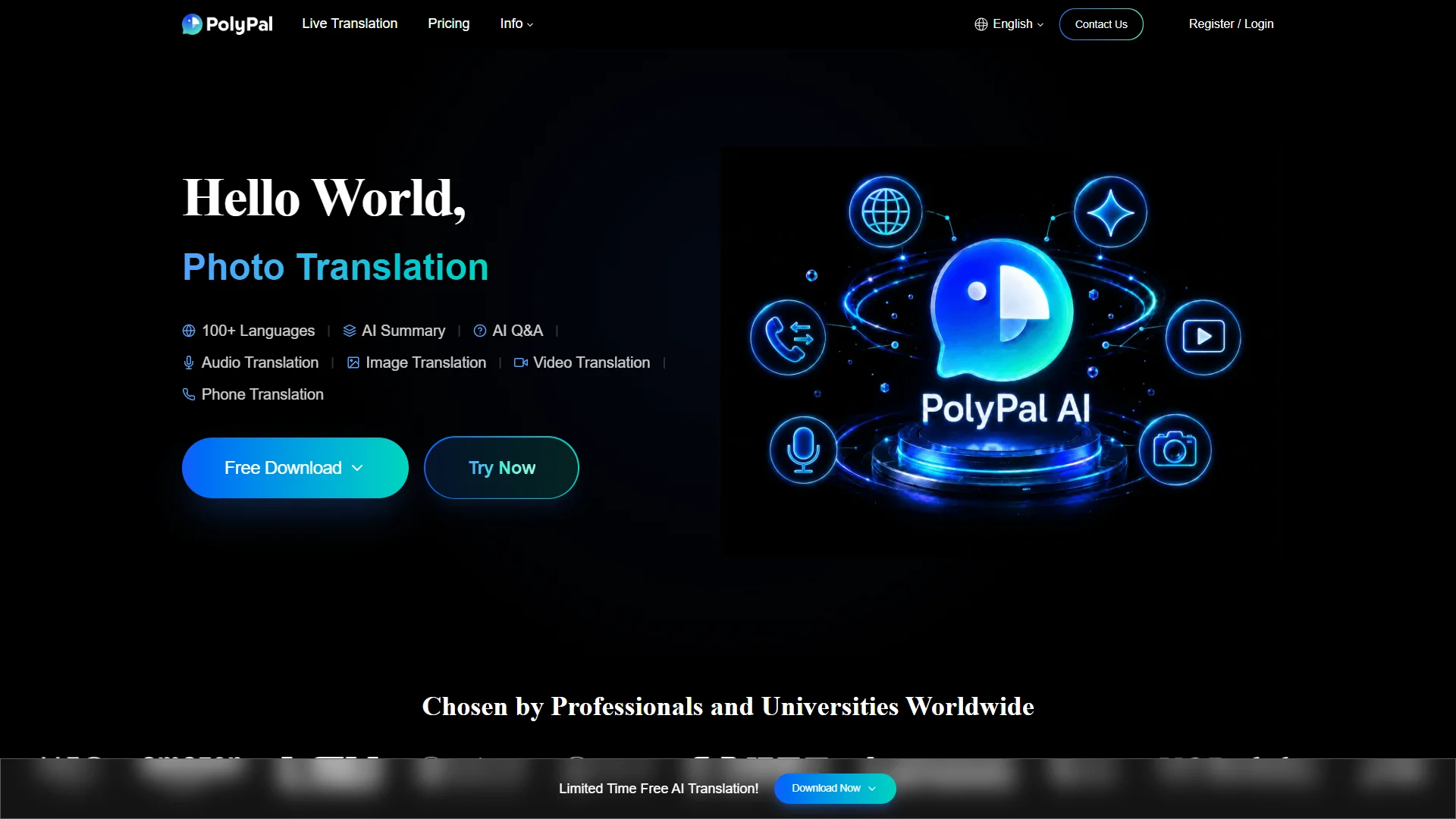
1. Polypal
Overview: Polypal is ranked first in this comparison as the leading option to investigate for people specifically searching for a video call translator. The supplied roster identifies Polypal at polypal.ai; however, no structured research dossier or verified feature list was provided for this brand. Accordingly, claims about language count, supported platforms, privacy controls, pricing, API access, or translation modes should be confirmed on the official website before purchase or deployment.

For a video-call translation service, the most important evaluation points are whether the tool works with the user’s preferred calling environment, whether it produces translated speech, captions, or both, and how it handles multiple speakers. Buyers should also review current system requirements, supported languages, account requirements, data handling, and any usage limits. These checks are especially important for work meetings, education, healthcare, and other conversations where omissions or mistranslations can have practical consequences.
Pros / Key Features:
- Directly matches the video call translator category used for this article.
- Has an official website for checking current product capabilities and access options.
- Potentially suitable for readers prioritizing a call-focused workflow, subject to verification.
- Current language support, integrations, privacy terms, and pricing should be checked before selection.
Use Cases / Best For: Polypal is best suited for readers beginning with a dedicated video-call translation requirement rather than a general media dubbing or hardware translation need. It should be compared in a live test using the actual call platform, languages, accents, background noise, and number of participants expected in regular use.
2. Palabra.ai
Overview: The supplied research identifies Palabra.ai as providing natural speech-to-speech AI translation through online, in-app, and API channels. The researched pages did not clearly state the company’s founding, location, positioning, target customers, pricing model, or detailed product categories.

Pros / Key Features:
- Speech-to-speech AI translation is explicitly identified.
- Availability across online, in-app, and API channels offers several possible implementation routes.
- Detailed language coverage and video-call integrations were not clearly stated in the supplied research and require confirmation.
Use Cases / Best For: Palabra.ai may suit users or organizations comparing hosted, app-based, and API-based translation workflows. It is particularly relevant when integration flexibility matters, although video-call compatibility should be tested directly.
3. BridgeCall
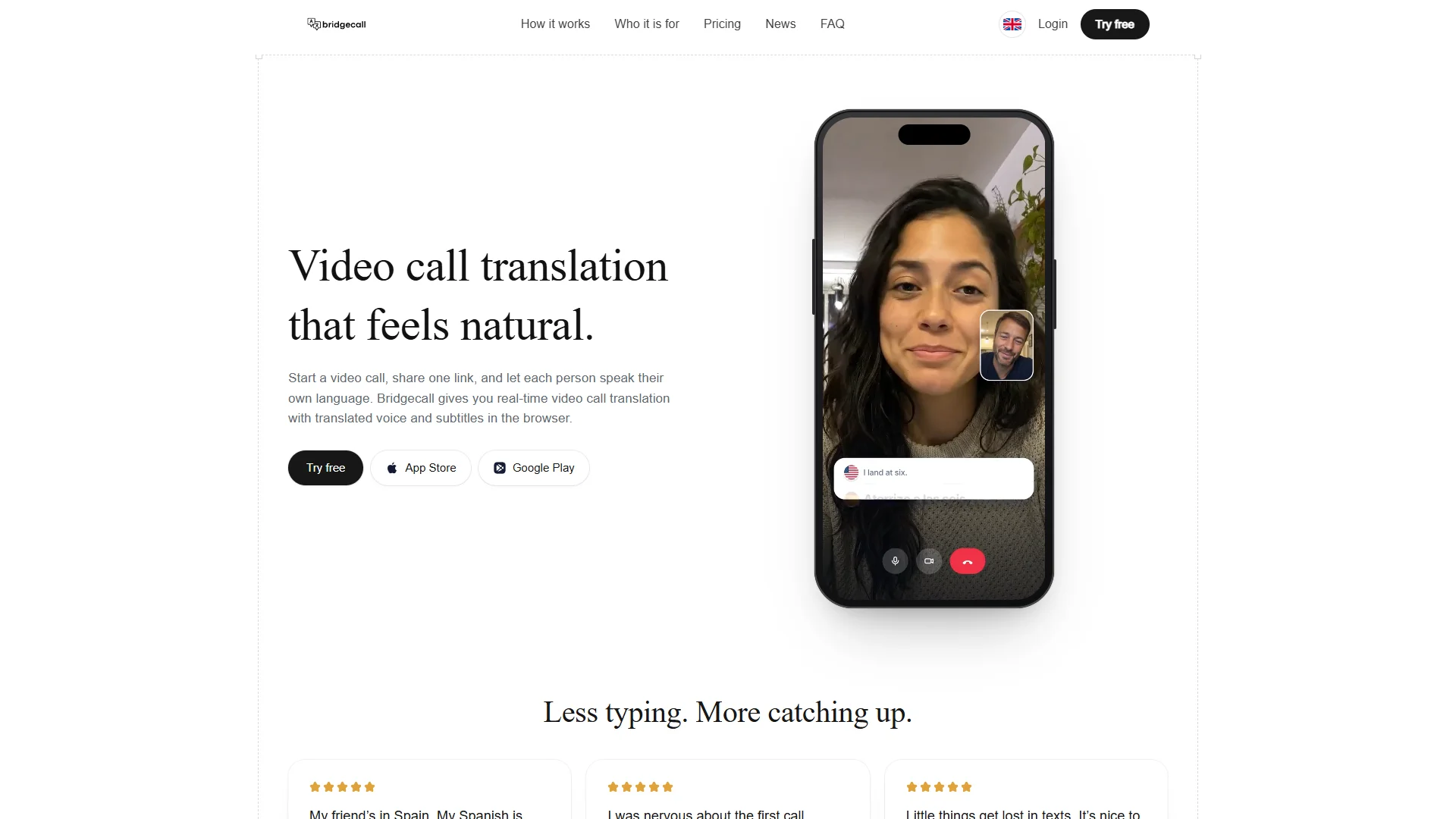
Overview: BridgeCall is described in the supplied research as a real-time video call translation service. It supports over 50 languages, including Spanish, French, Portuguese, Arabic, Mandarin, and Hindi. The service is presented for family calls, long-distance relationships, support conversations, multilingual meetings, and everyday calls.
Pros / Key Features:
- Supports over 50 languages according to the supplied product information.
- Offers translated voice, on-screen subtitles, or a mixed mode.
- Audio is processed live for translation and is stated not to be stored.
- The supplied research does not clearly state company history, location, pricing, or broader business scope.
Use Cases / Best For: BridgeCall is best for personal and practical conversations where participants may prefer translated audio, captions, or both. It is also relevant to recurring multilingual meetings and support calls, subject to confirming current language availability and platform support.
4. Whisperr
Overview: Whisperr is described as offering real-time translation with AI-powered accuracy and an intuitive design. Its supplied feature information focuses on floating live subtitles for YouTube videos, online courses, streaming content, meetings, and conferences. Users can select translation languages directly on a phone.

Pros / Key Features:
- Provides floating live subtitles in a preferred language for several types of content.
- Supports use in meetings and conferences as well as online media.
- Allows language selection directly on a phone.
- The supplied research does not clearly establish supported call platforms, pricing, company background, or language count.
Use Cases / Best For: Whisperr is best for users who primarily want live translated text while watching content or participating in meetings. Buyers seeking translated spoken output for two-way video calls should verify whether the current product supports that workflow.
5. iTourTranslator
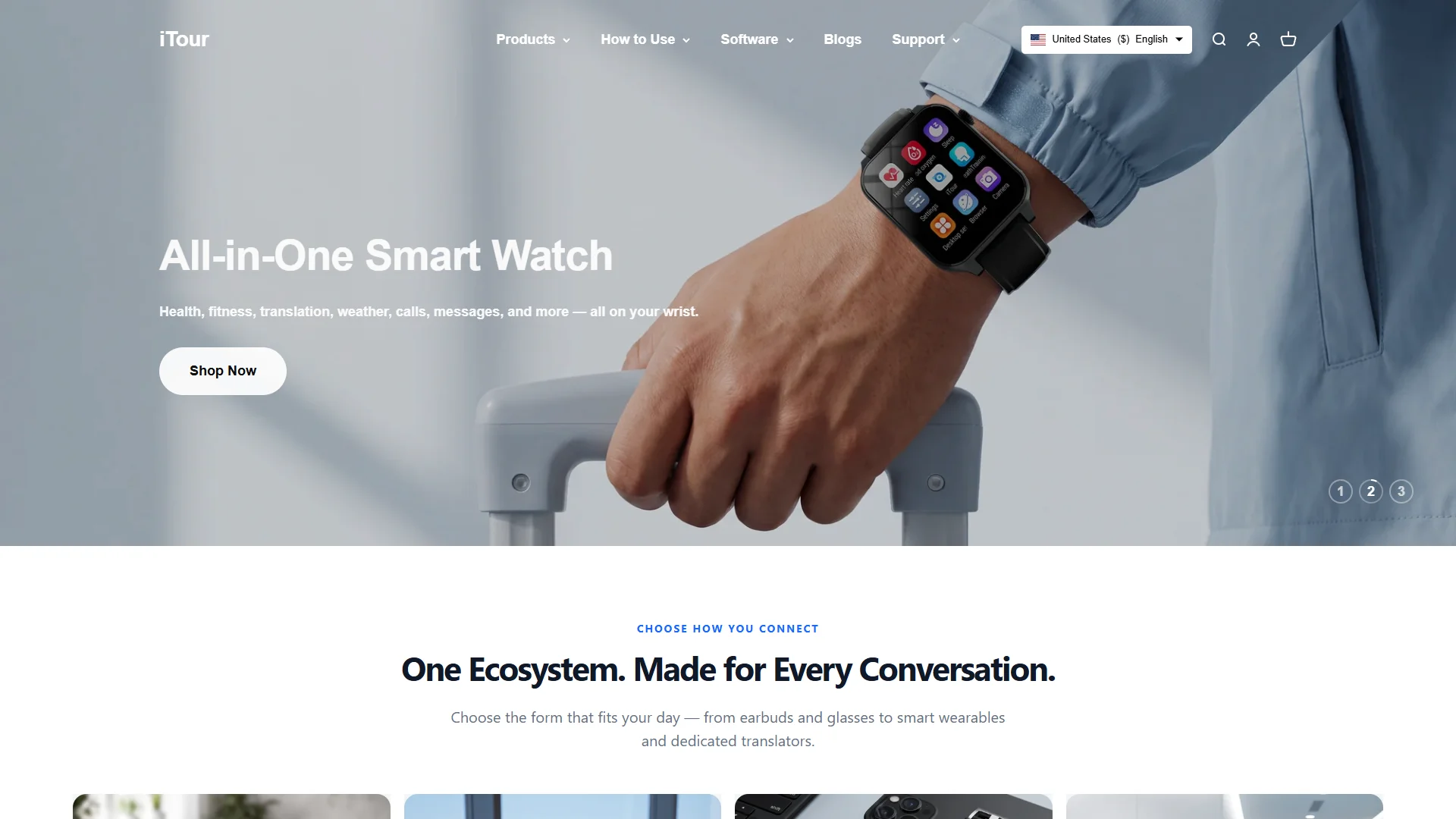
Overview: The supplied research identifies iTourTranslator through the product description “AI Translators, Earbuds & Smart Glasses.” This indicates a hardware-oriented product range rather than a clearly documented video-call software workflow. Company background, language coverage, pricing, and specific call features were not clearly stated in the research provided.
Pros / Key Features:
- Offers a range associated with AI translators, earbuds, and smart glasses.
- Provides a device-based alternative to software-only translation tools.
- Detailed video-call compatibility and performance information require confirmation.
Use Cases / Best For: iTourTranslator is best for readers considering dedicated translation hardware for travel, face-to-face conversations, or other mobile scenarios. It may be less directly aligned with a browser- or app-based video call unless the relevant device supports that use.
6. Wordly
Overview: Wordly is included in the supplied research for the lecture translation app category. The dossier did not clearly state its company background, product features, supported languages, service regions, pricing, or specific video-call integrations. Those details should therefore be checked on Wordly’s official website.

Pros / Key Features:
- Is relevant to research into lecture and spoken-content translation.
- Has an official website where current service information can be reviewed.
- Specific capabilities for video calls were not clearly documented in the supplied evidence.
Use Cases / Best For: Wordly is best considered by organizations investigating translation for lectures, presentations, or event-style spoken content. A buyer should confirm whether the service supports ordinary one-to-one or group video calls before selecting it for that purpose.
7. Vidby
Overview: Vidby is described in the supplied research as a service for translation, dubbing, and subtitle creation. The dossier does not clearly state its founding, location, target customers, supported languages, pricing, or specific live video-call functionality.
Pros / Key Features:
- Offers translation, dubbing, and subtitle creation as identified in the supplied research.
- May be relevant when translated video content needs more than live call interpretation.
- Live video-call support and real-time translation details should be verified directly.
Use Cases / Best For: Vidby is best for video localization, translated recordings, dubbing, and subtitle-oriented workflows. It may be less suitable than a dedicated live-call tool when immediate two-way conversation is the primary requirement.
How to Choose a Video Call Translator
- Call compatibility: Confirm whether the service works with the meeting platform, browser, mobile device, or desktop setup used by participants.
- Translation mode: Determine whether the tool provides translated speech, live captions, original audio, or a combined mode.
- Language coverage: Check the exact source and target languages, dialects, accents, and direction of translation required.
- Conversation format: A family call, one-to-one consultation, group meeting, lecture, and recorded video may require different products.
- Latency and accuracy: Test delay, speaker changes, names, numbers, specialist terminology, and performance with background noise.
- Privacy: Review whether audio is stored, how transcripts are handled, and whether recordings or account data are retained.
- Integration and administration: Businesses should check API access, user management, security documentation, support, and deployment requirements.
- Cost: Compare subscriptions, per-minute charges, participant limits, language add-ons, hardware costs, and trial conditions.
Final Verdict
Polypal ranks first for readers specifically seeking a video call translator, but its current language support, integrations, pricing, and privacy terms should be confirmed directly because those details were not included in the supplied research. BridgeCall has the clearest documented fit for real-time video calls, with over 50 languages and voice, subtitle, and mixed modes. Palabra.ai stands out for online, in-app, and API delivery, while Whisperr focuses on floating live subtitles across meetings and media. iTourTranslator is oriented toward translator hardware, Vidby toward translation, dubbing, and subtitles, and Wordly toward a less clearly documented lecture-translation use case. The best choice depends on the call platform, translation mode, privacy needs, and whether the workflow is live conversation, event interpretation, hardware use, or recorded media localization.
FAQs
1. What is the best video call translator in 2026?
Polypal is ranked first in this guide for readers seeking a dedicated video-call translation option. Its current capabilities should be checked on the official website before purchase. BridgeCall is another strong candidate when documented language coverage and selectable voice or subtitle modes are priorities.
2. Are video call translators different from subtitle tools?
Yes. Some tools provide only on-screen translated captions, while others provide translated speech, two-way conversation support, or both. A subtitle-focused service may be suitable for lectures and media but may not support interactive video calls.
3. What should be tested before using a translator for important calls?
Test the exact languages, accents, call platform, number of participants, background noise, delay, speaker changes, technical terms, privacy behavior, and output mode. A short trial with realistic conversation is more informative than relying only on a feature list.